
Heart failure affects 5.5 million Americans and 22 million people worldwide every year. Its victims span the spectrum: half are healthy young athletes, half are aging baby boomers.
Yet there are only approximately 10,000 heart specialists in the United States serving a patient population of 80.7 million. The gap between supply and demand in cardiovascular care is profound and growing.
In 2009, the United States spent $2.5 trillion on medical expenses. That figure is projected to reach $4.5 trillion by 2019. According to the Commonwealth Foundation, one-third of U.S. households spent more than 10% of their income on medical care, and among low-income households, 53% spent an average of 44% of their income on healthcare.
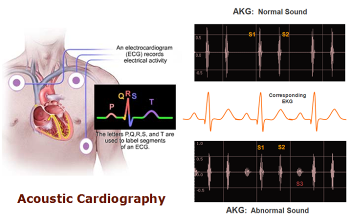
For centuries, physicians have used the acoustic stethoscope and phonocardiograph to diagnose conditions of the heart, lungs, and intestines. These instruments remain among the most valuable diagnostic tools available — non-invasive, immediate, and informative.
We propose extending this proven diagnostic approach using non-invasive acoustic cardiography: a consumer-grade device combining surround-sound signal processing, artificial intelligence, and an internet-connected socio-medical network. This system would allow continuous, at-home monitoring of cardiac health, provide early warning of anomalies, and share anonymized data through a community health network comparable to a medical WebMD.
Please join us if you want to see the cost and performance of medical devices taking the route of consumer electronic devices.